I retired from my job with the provincial college at the end of the Covid pandemic in 2022 after 30-plus years of a career as an adult educator. It took some time to “unlink”, but as the reality of retirement took hold I had a notion of returning to a childhood pastime of drawing and painting. In truth, I hadn’t totally abandoned my art for all those years. I have picked up a pencil, pen, or brush from time to time and tried to capture an image from my travels or my memory. But it seemed at times a chore to do as an adult what gave me such joy as a youngster.
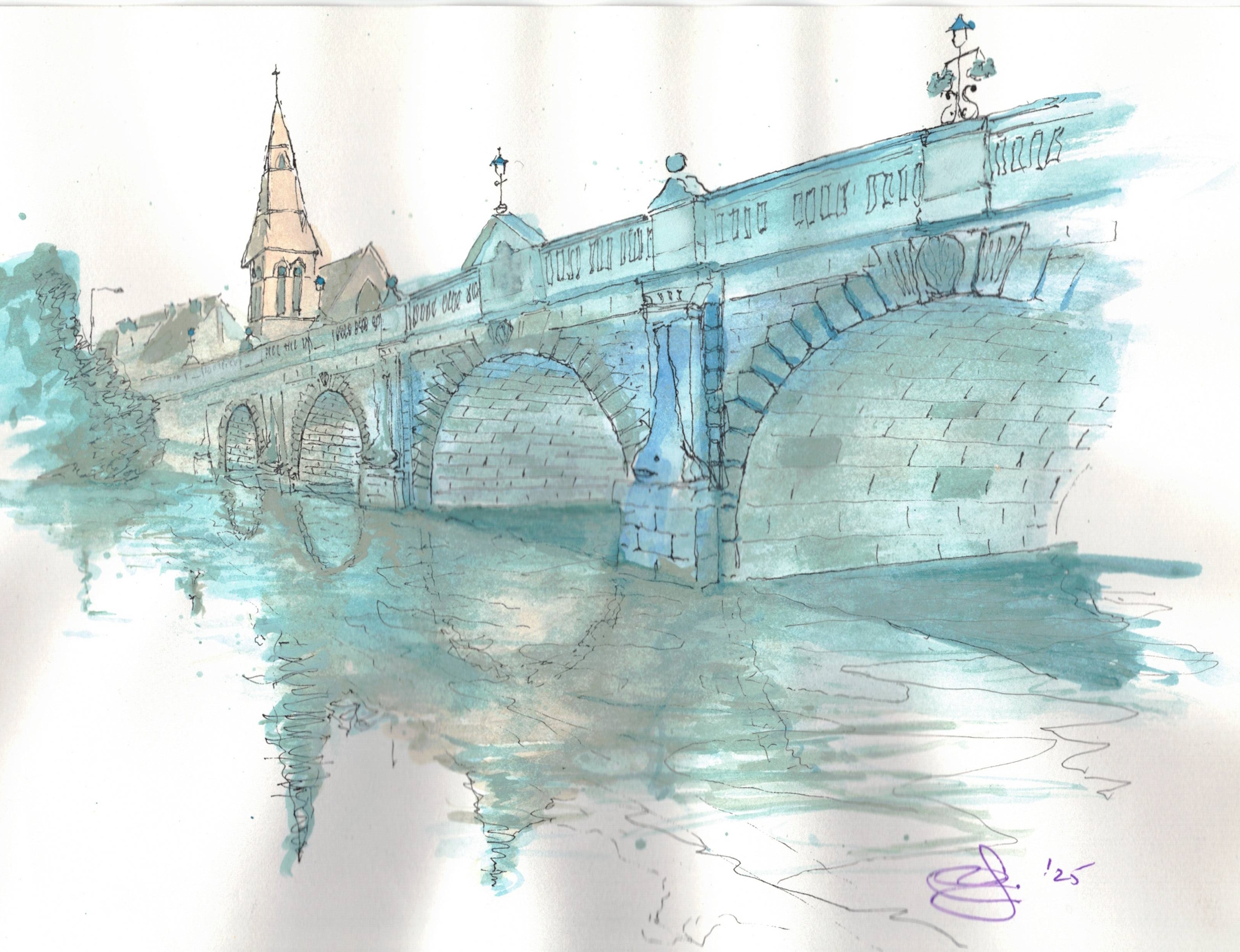
“English Bridge, Shrewsbury, UK” – by Stephen Parsons © 2025, from a lesson and photo by Ian Fennelly
About two years ago, I became interested in the phenomenon of urban sketching – in part because I felt that my reticence to getting serious about art was, in part, that I was too concerned with detail and, as a result, too many of my studies became full-blown projects when drawing en plein air. I had heard that urban sketching was a fast way to capture impressions on site.
In January last year, I began to follow some talented urban artists like Mark Taro Holmes, Peter Sheeler, and Ian Fennelly and finally enrolled in a course being delivered online by the latter. It was energizing just having some direction and some accountability for my art…but then I wasn’t sure it was really my art since I was largely following the direction of one artist – sketching along with a host of colleague learners painting the same image from the same reference photo.
I did acquire some new skills and techniques from that experience – in particular a process that I could follow that goes like this: pre-sketching (to establish the composition); capturing large objects in light minimalist sketches in pencil and ink; then adding in color to this basic structure; following with some tone to add depth; and, finally, adding in greater detail in ink, gel, and gouache – highlighting the significant personal impressions of a scene or venue. I came to realize quickly that I was no Ian Fennelly – nor did I want to be. The form of urban sketching that he promotes is somewhat whimsical, sometimes bordering on cartoon. I wanted to remain impressionist in style while presenting an image that was more realistic – not a caricature and not overly exaggerated or comical. While his style never stuck with me (and I am pleased to say that I feel I have developed a unique style of my own through my work), that process has persisted into a practice as I have been working on new pieces, techniques, and from my own photos and live, on-site experiences.
There is something else, though, that has emerged during my study this last year and I don’t know if it was there when I was young or if it has only developed in this past year or two. It is a profound change in the way I see things, how I look at a scene, view the sky, observe a beach or a trail, appreciate an old building or even a derelict barn, truck, bicycle. I call it the eye of an artist and it has brought me a new perspective on the beauty that exists in this world – even when it may not seem so beautiful to all. In a world where there are so many things that are distinctly not beautiful, having the eye of an artist and a return to a childhood joy have given me great peace. Are you an artist who has experienced this unique perspective? Do you consciously examine the clouds, the sea, a building or a potential subject wondering what techniques you might use to capture it in your medium? Do you have the eye of an artist?
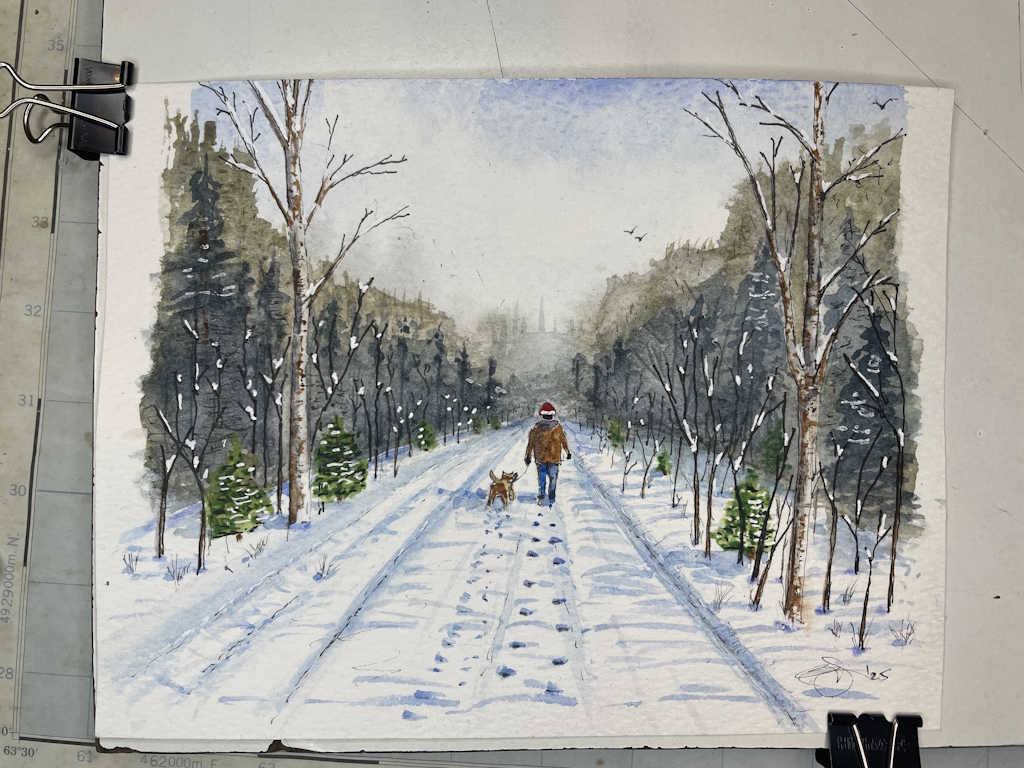
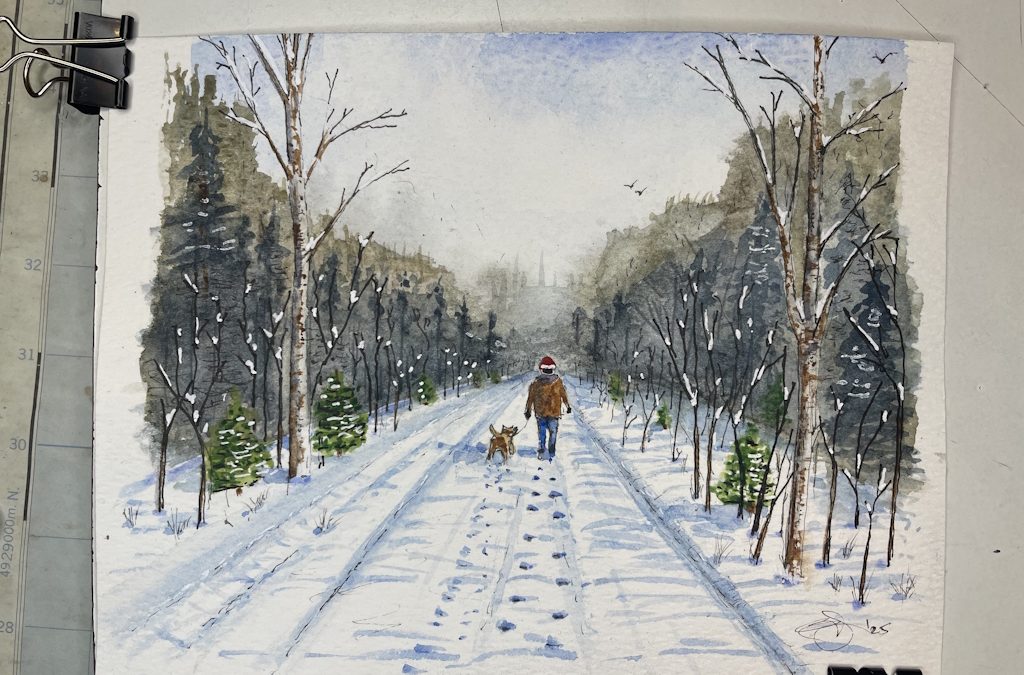
“Fresh Snow on the Trail”, Gaetz Brook Greenway, East Chezzetcook, Nova Scotia by Stephen Parsons ©2025

Recent Comments