Portfolio
While we are proud of everything we build, we believe that some of our best work has been that commissioned by our clients for specific purposes, people, or occasions (and therefore not featured in our catalog). The following is a partial portfolio of some of our most cherished custom projects. If there is something you like of the projects below or if you have an idea or design you would like to discuss, drop us a line through our Contact page or on our Facebook site.
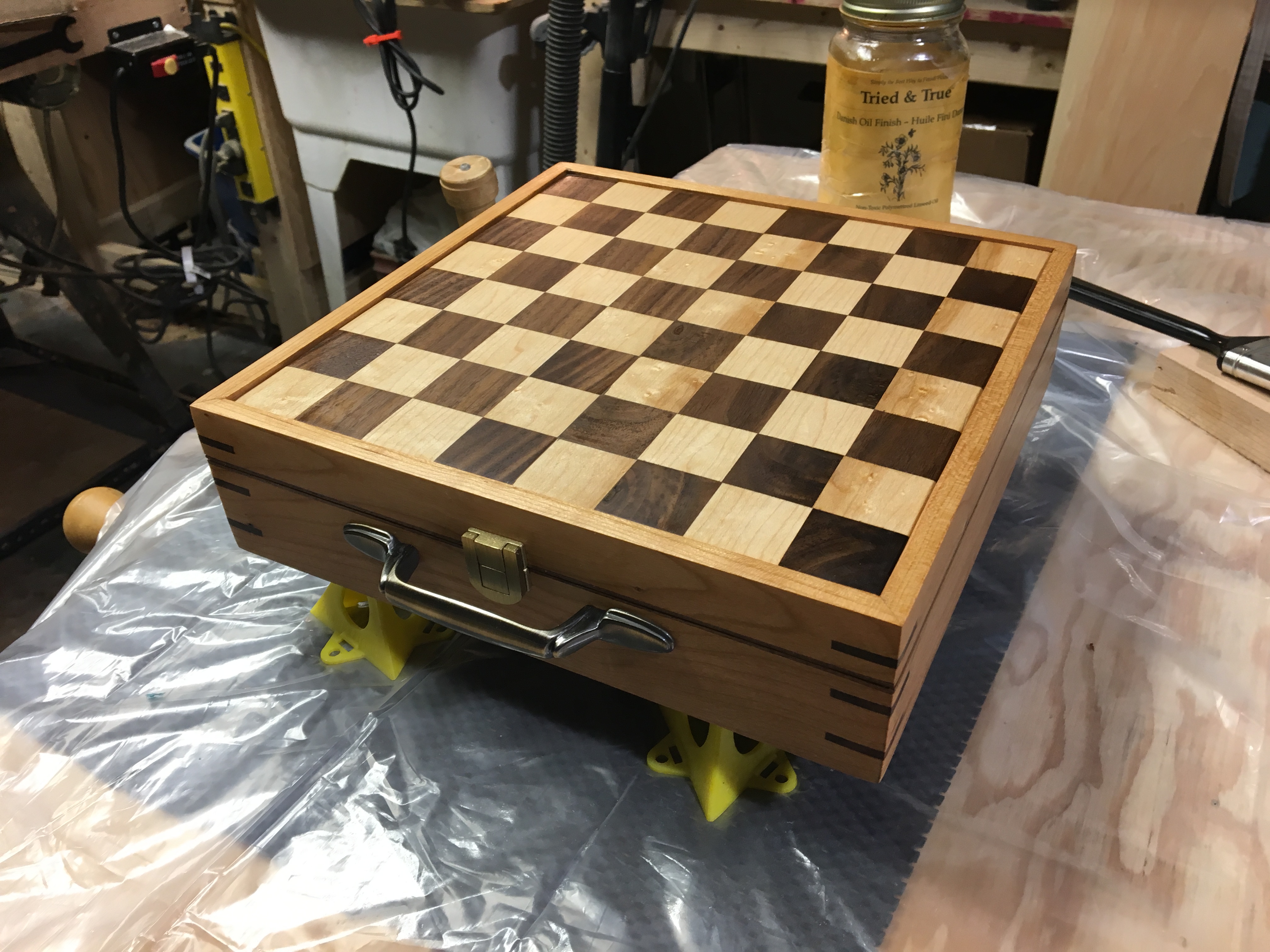
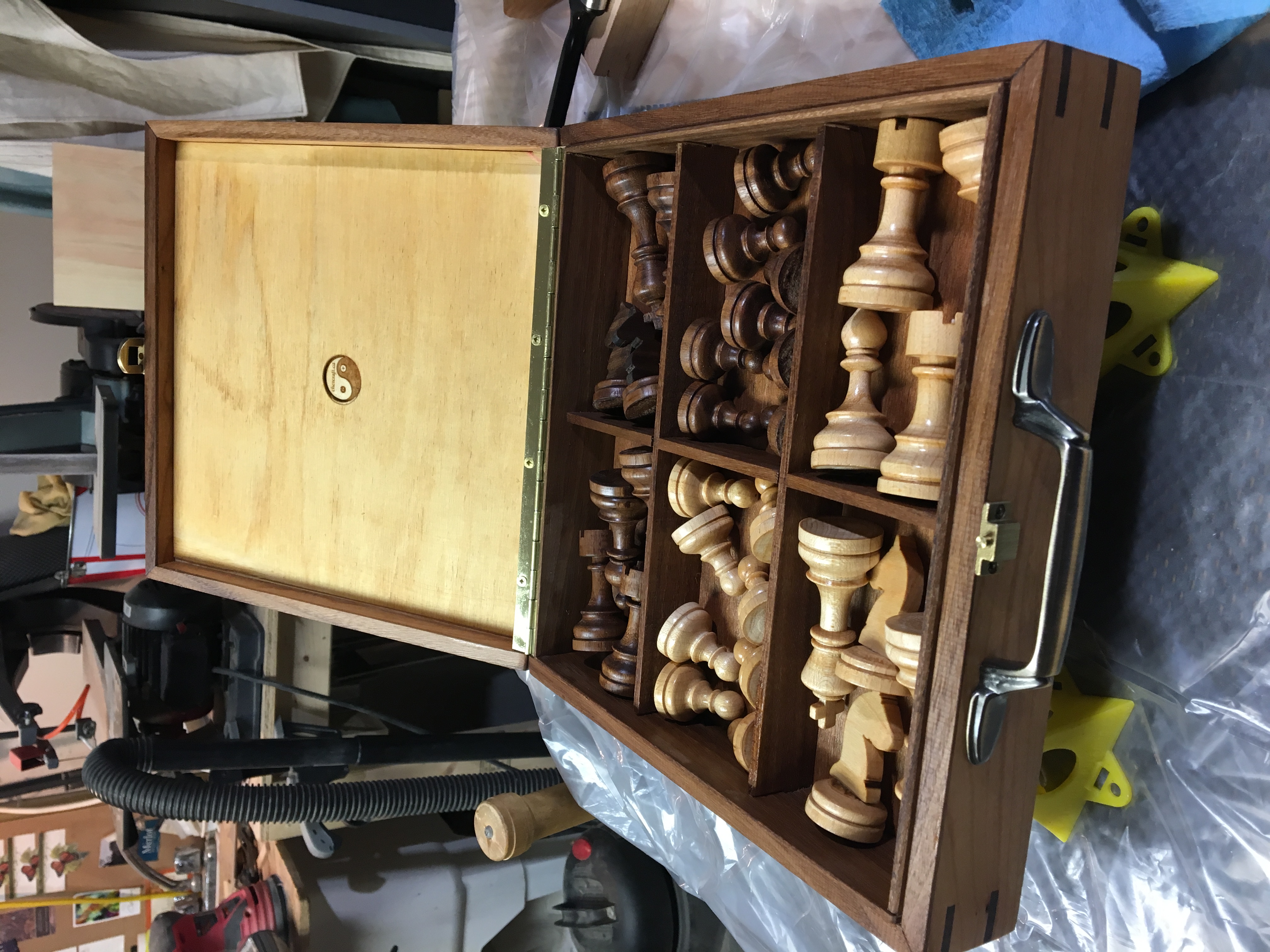
This was the first full chess set we developed – have done many more since, but always proud of the workmanship on this one – including a full set of dark and light playing pieces created with the help of our lathe duplicator. The playing surface is made of birds-eye maple and walnut, while the case is constructed of Nova Scotia Cherry with black walnut spines at the corners. Commissioned by a colleague, Donna M. this was a gift to her son.
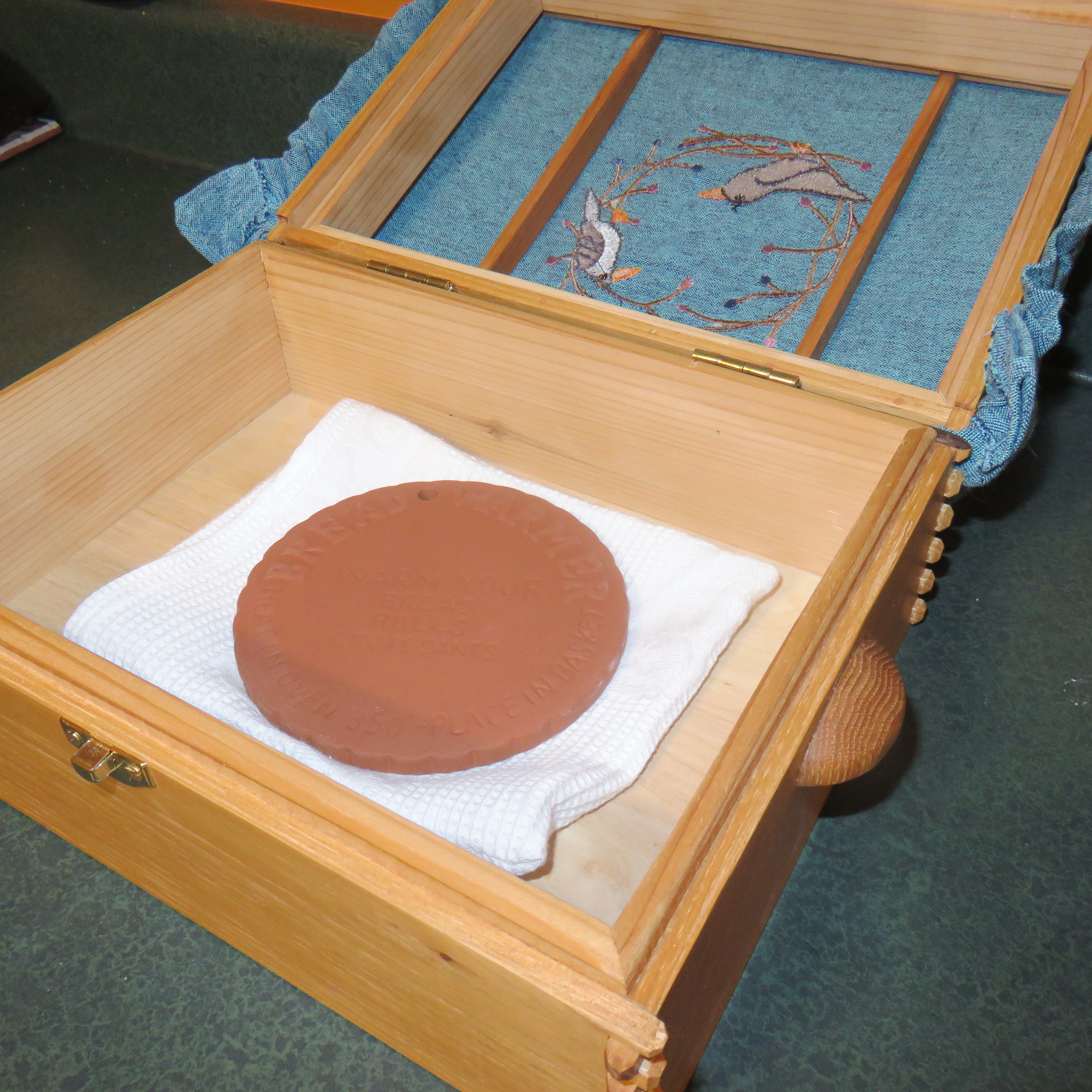
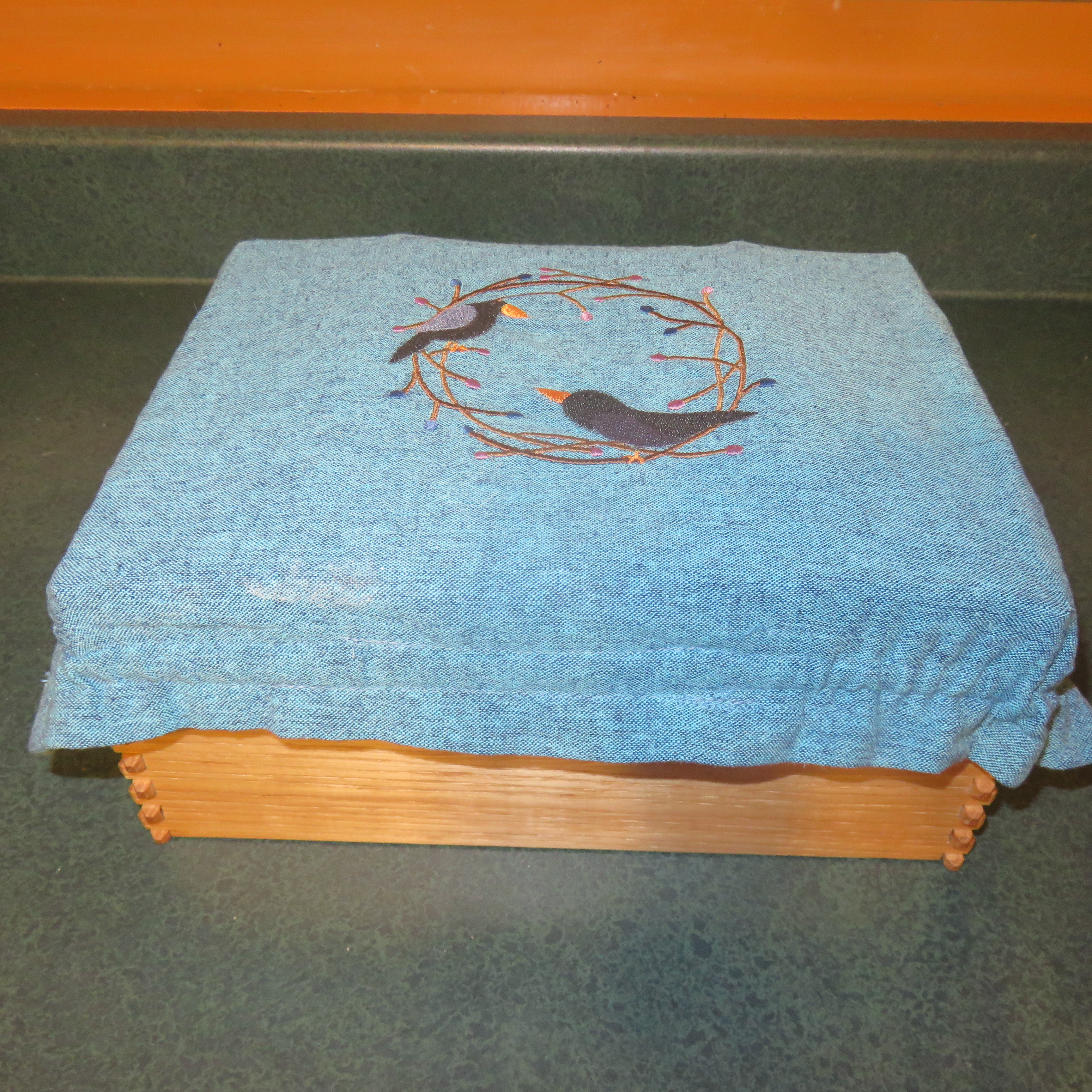
This unique design was inspired by a similar item I saw at a B&B many years ago. A muffin butler keeps bread rolls, muffins, croissants and so on warm using a clay warmer heated in the oven and slipped into a cloth pocket at the bottom of the box. The cloth cover can be removed to wash or replace with other designs for special occasions.
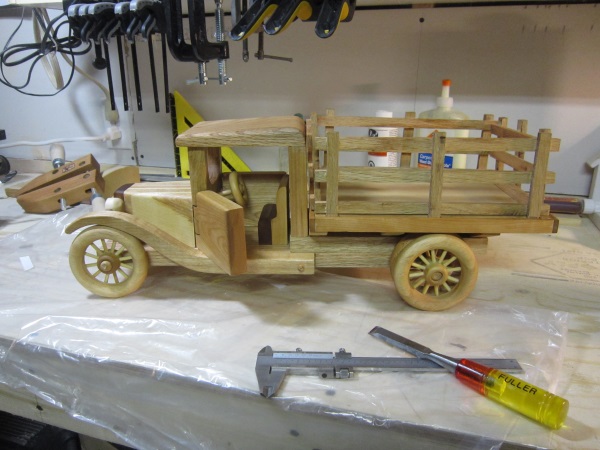
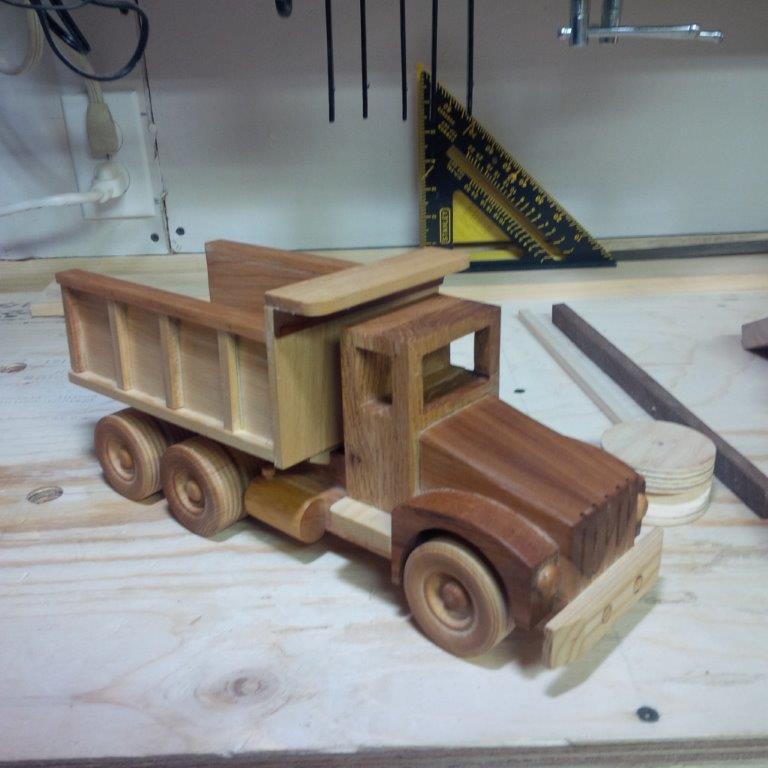
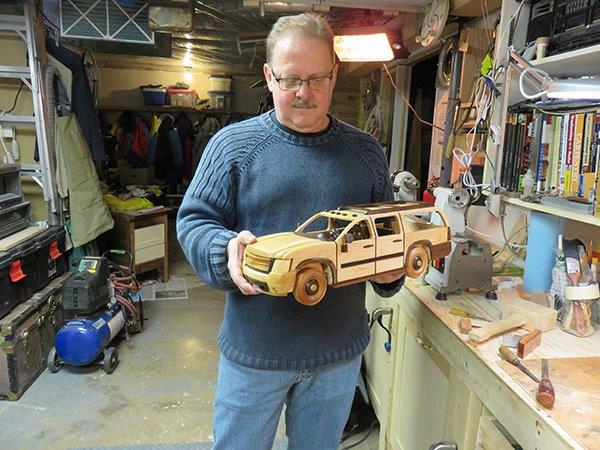
Over the years I have made a number of wooden models of cars, trucks, planes and so on. These were some of my favorites – from left to right: a flatbed farm truck for my wife, M.E.; a dump truck, built for my grandson, Zach; and a Chev Suburban commissioned by our good friend, Deborah.
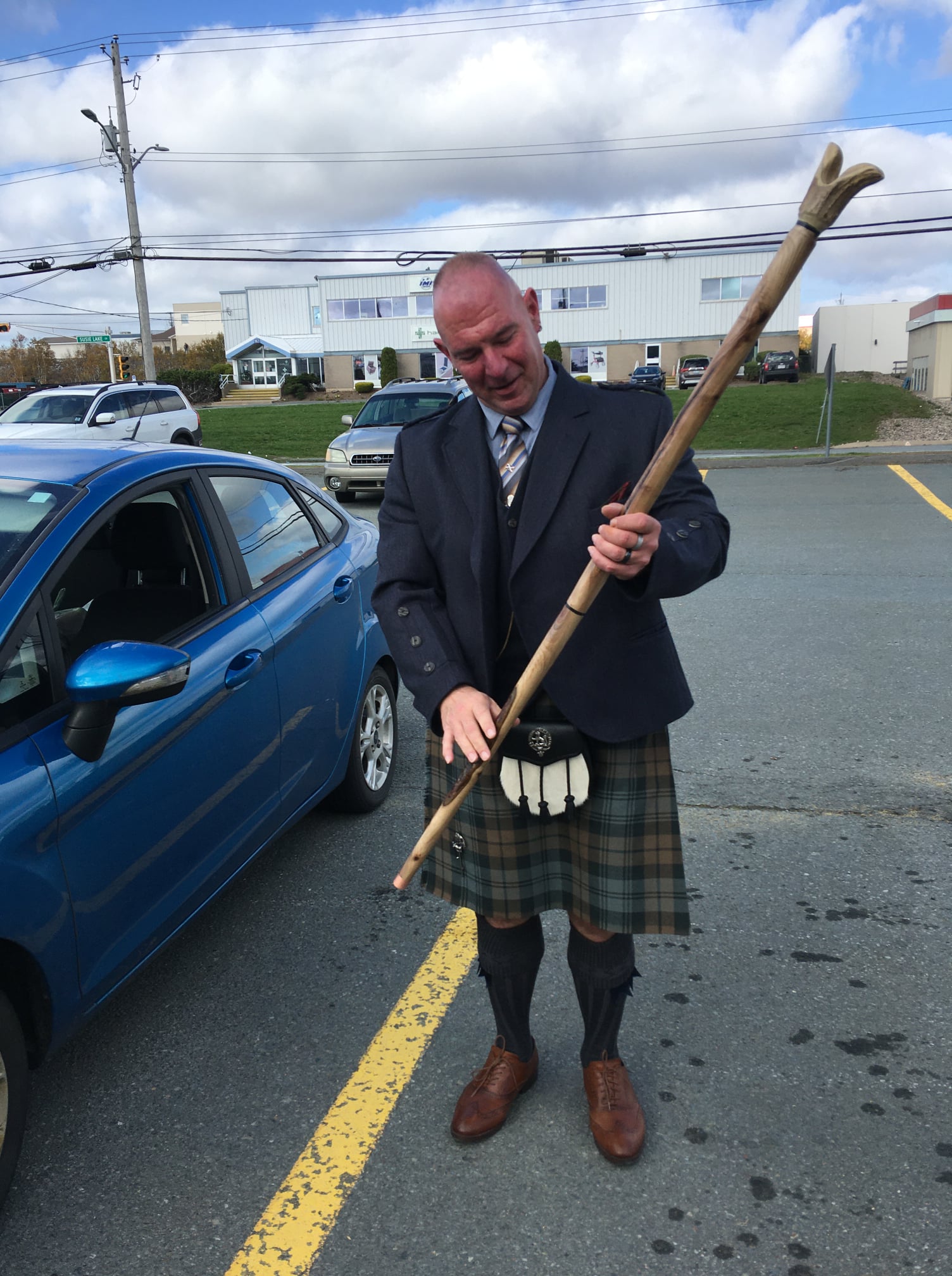
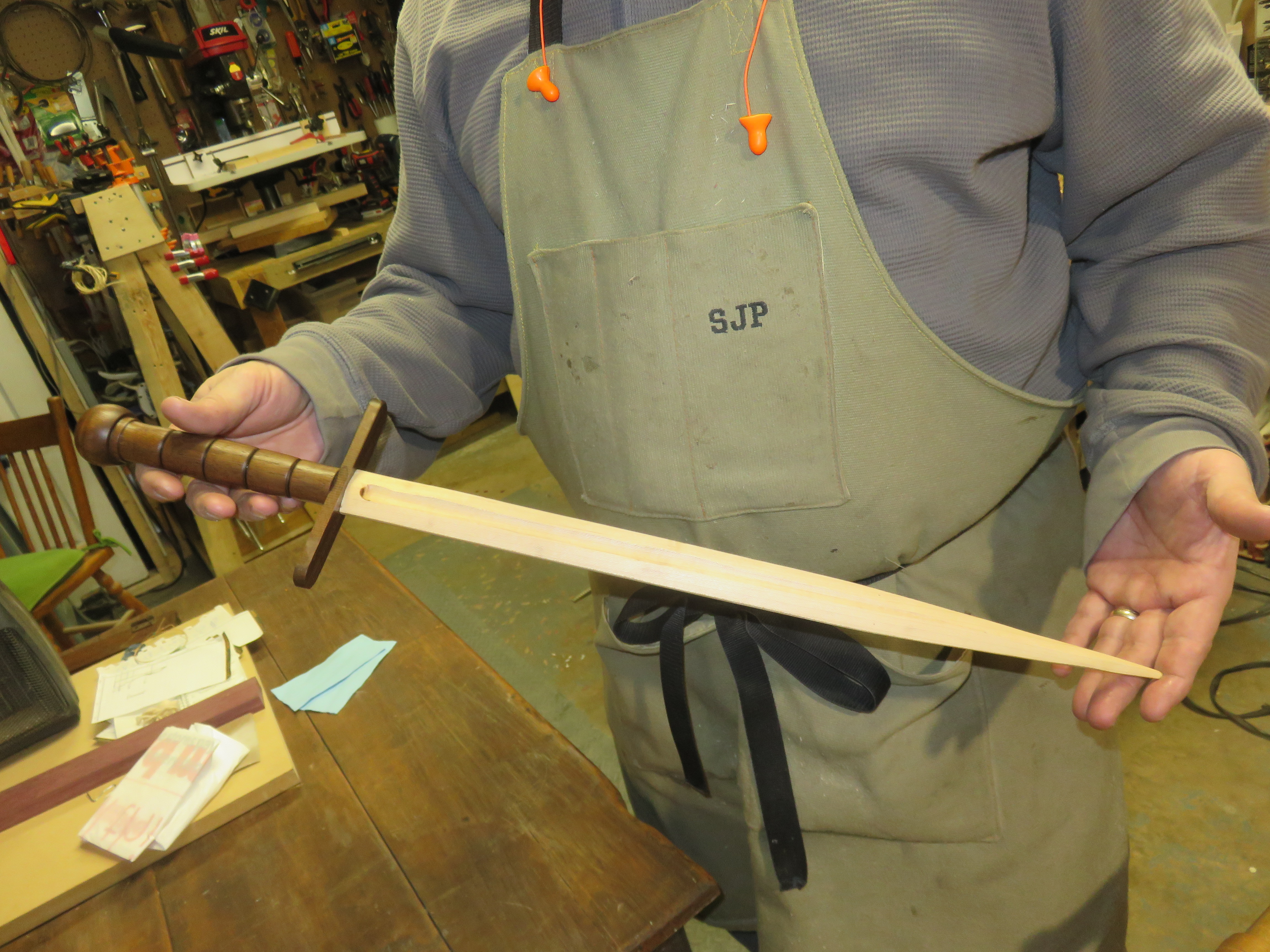
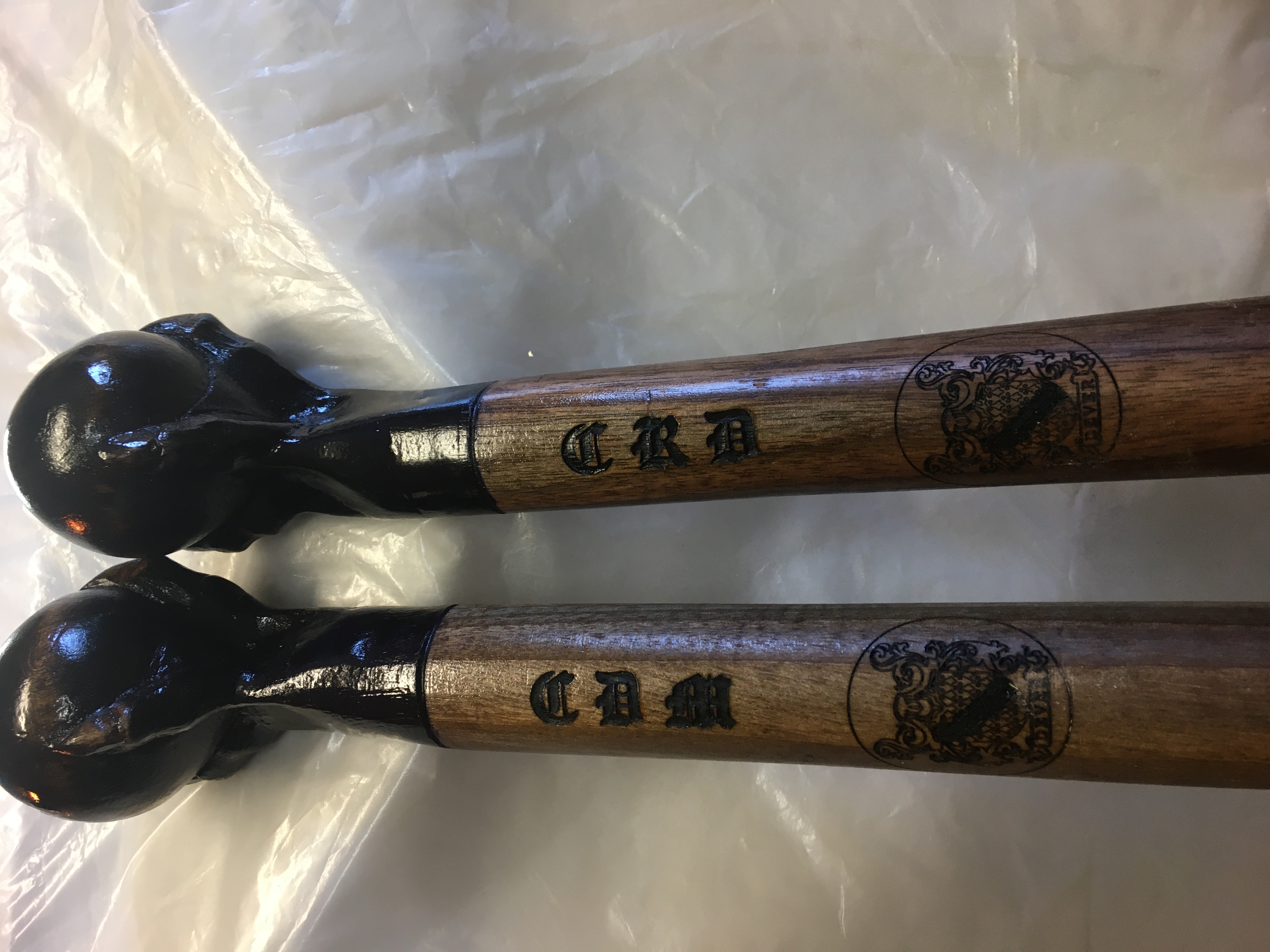
Traditional pieces are a lot of fun to work on and these three were nice challenges. From left to right: a thumbstick with elk antler thumb saddle for Wade (in traditional regalia); a small sword for my grandson; and a pair of ball-and-claw shillelaghs for Charles’ grandsons.

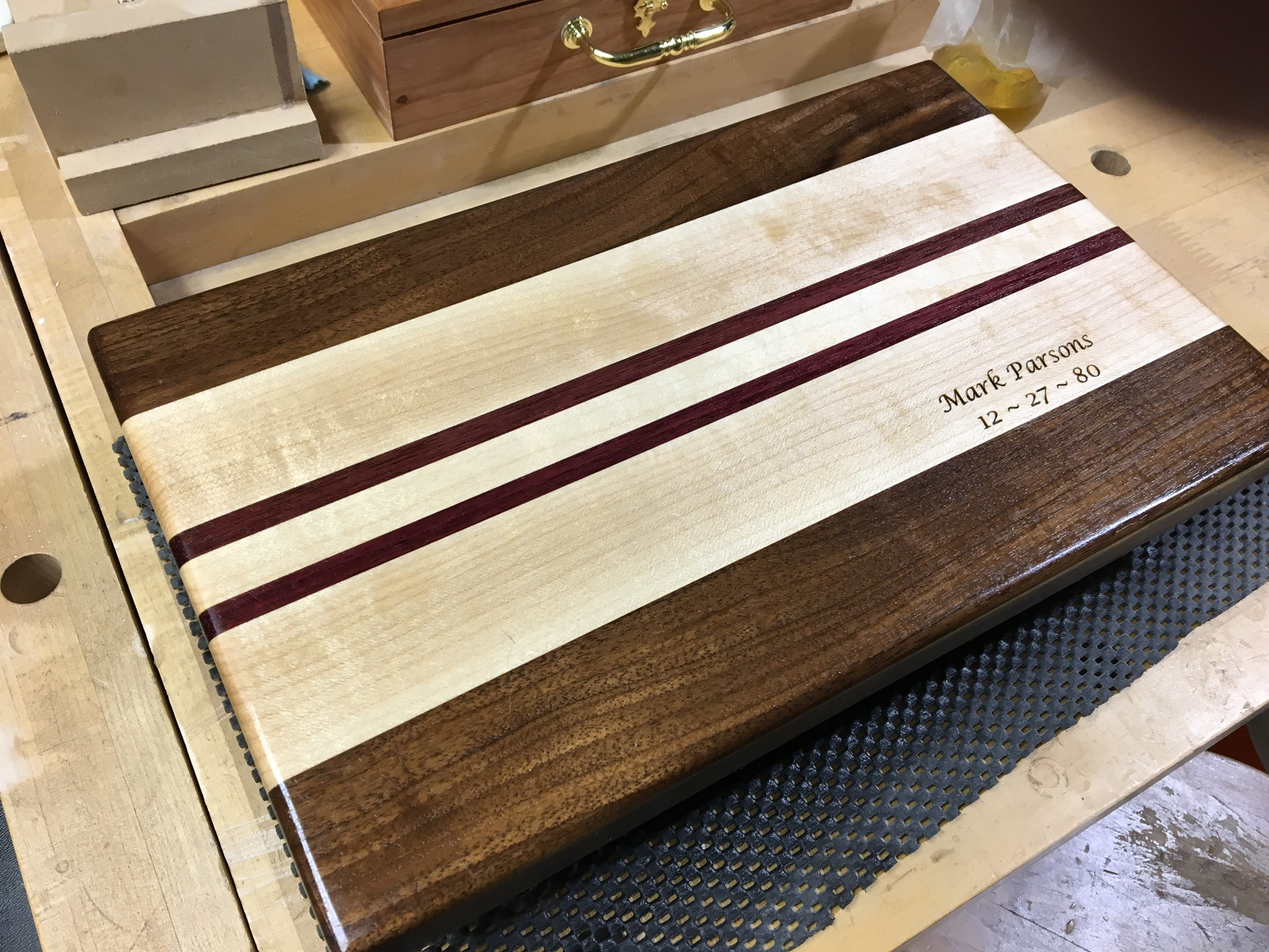
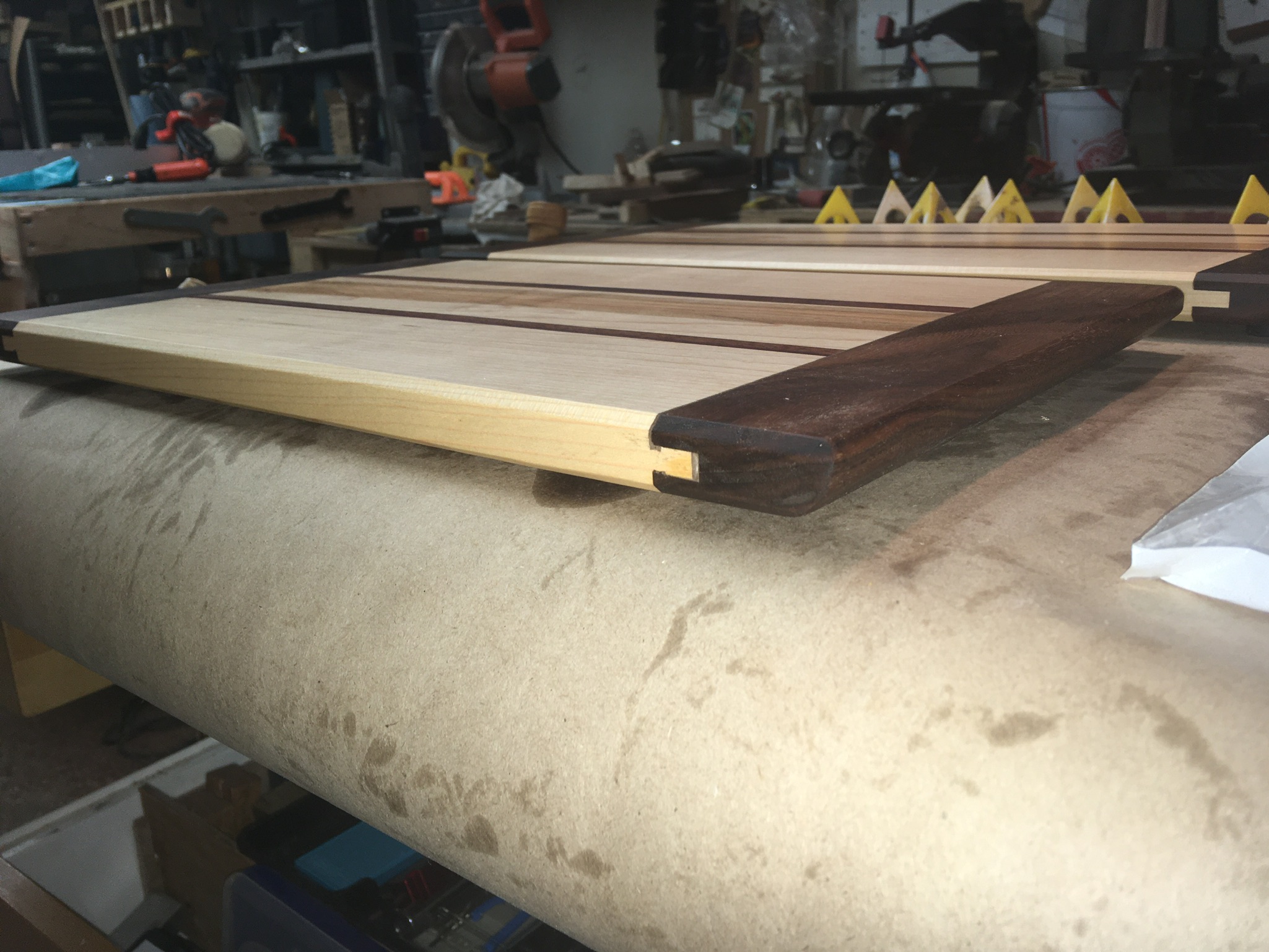
Nearly every woodworker will make a cutting or charcuterie board at some point in their career, especially since they are a great way to use up off-cuts. But some are made to specifications like these three: a birthday board for my oldest son; a Christmas board for my youngest son; and a beautiful board with breadboard ends for sale at a local gallery.
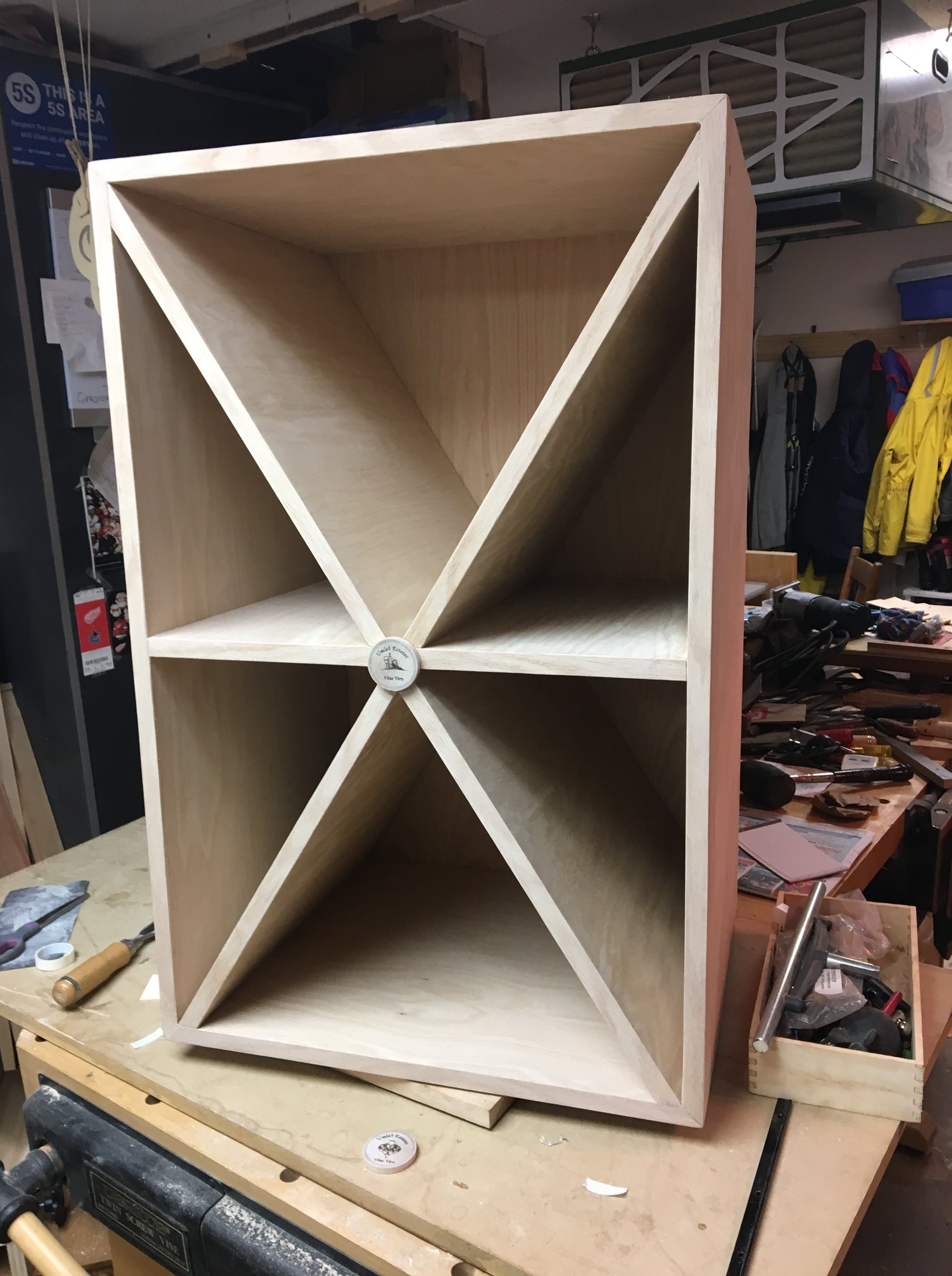
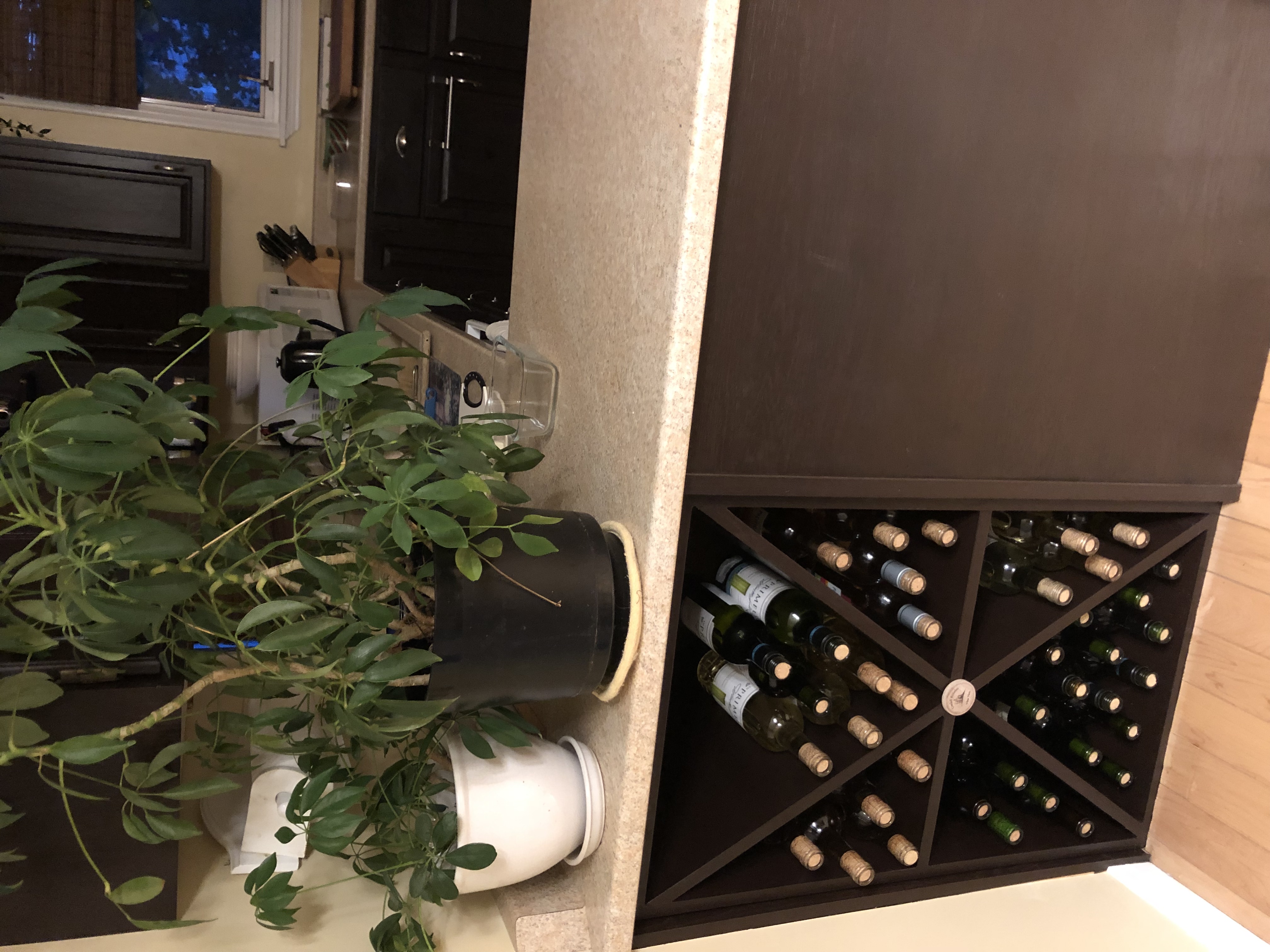
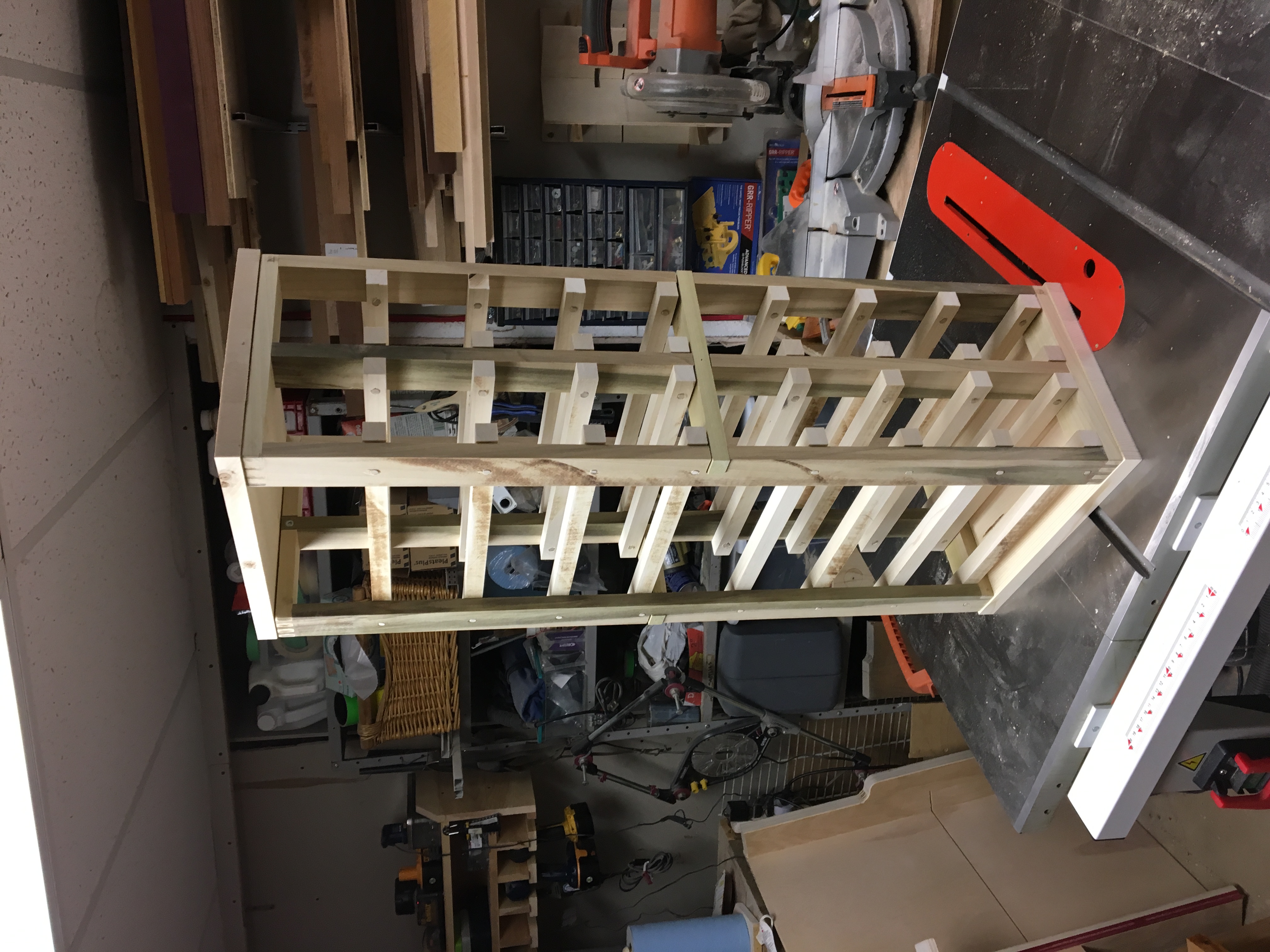
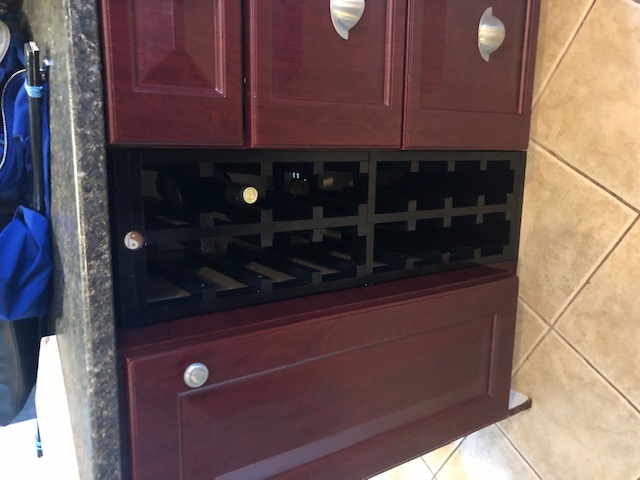
Winerack Built-ins
It is always a challenge to fill existing spaces with new furnishings and these two created unique problems, in part because of the difficulty to access the space and to close them to appear as part of the original design. From Left to right: Heather’s UK-flag influenced wine rack before staining; Heather’s wine rack stained and installed; Shelly’s wine rack assembled, unfinished; and Shelly’s installed unit.
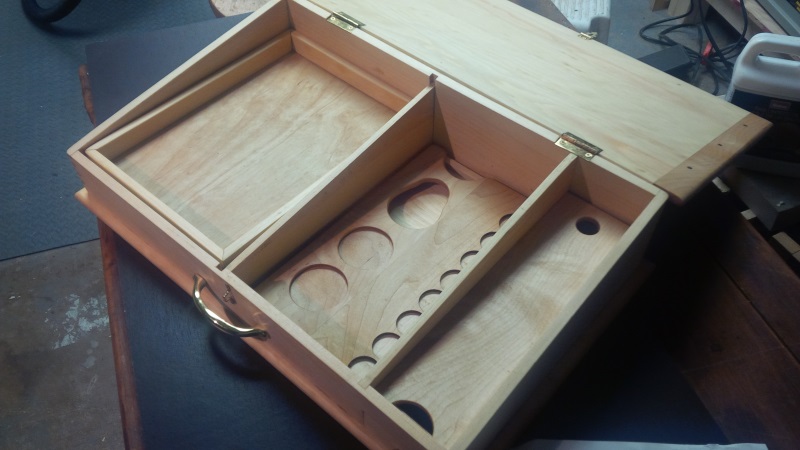
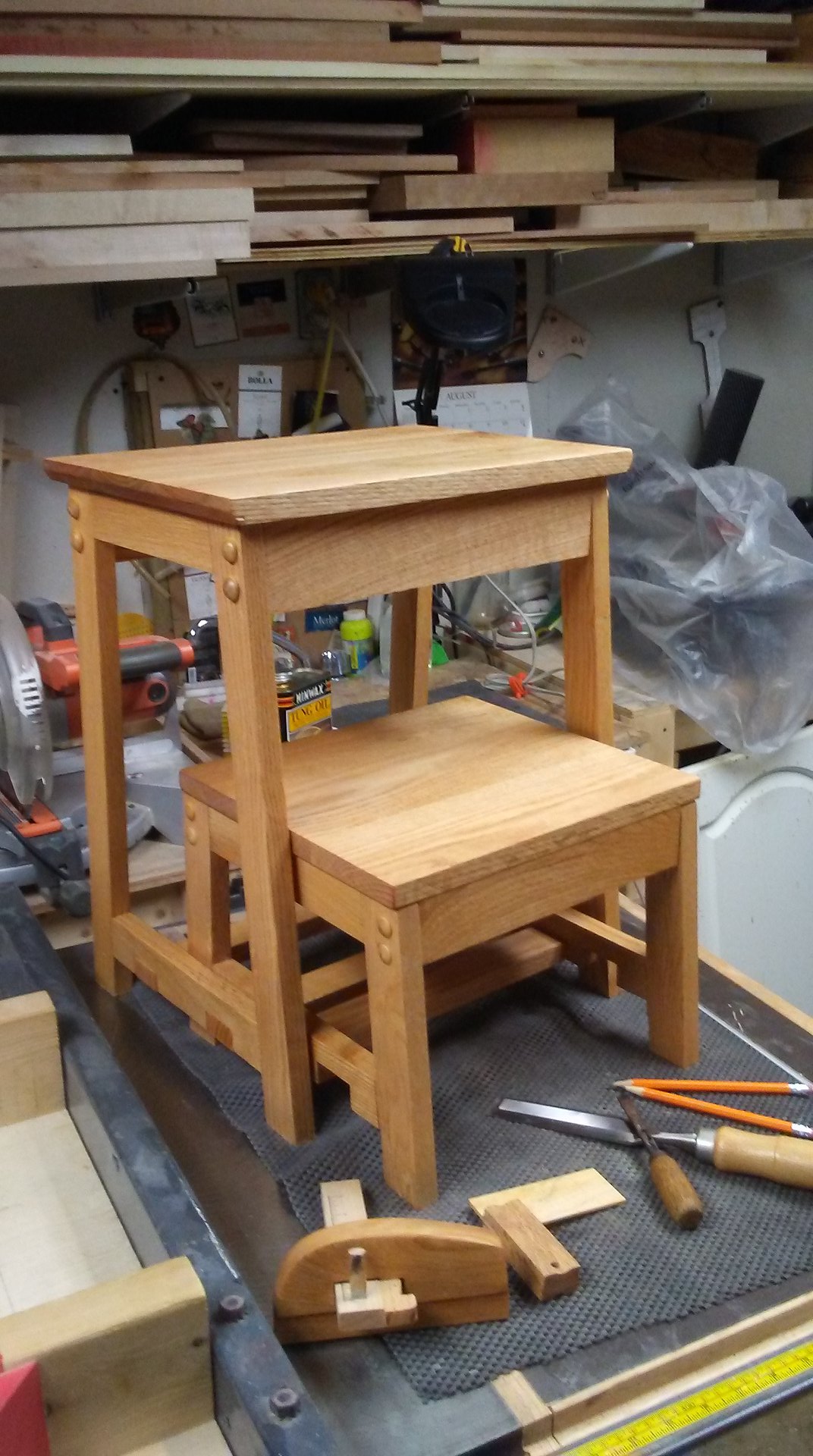
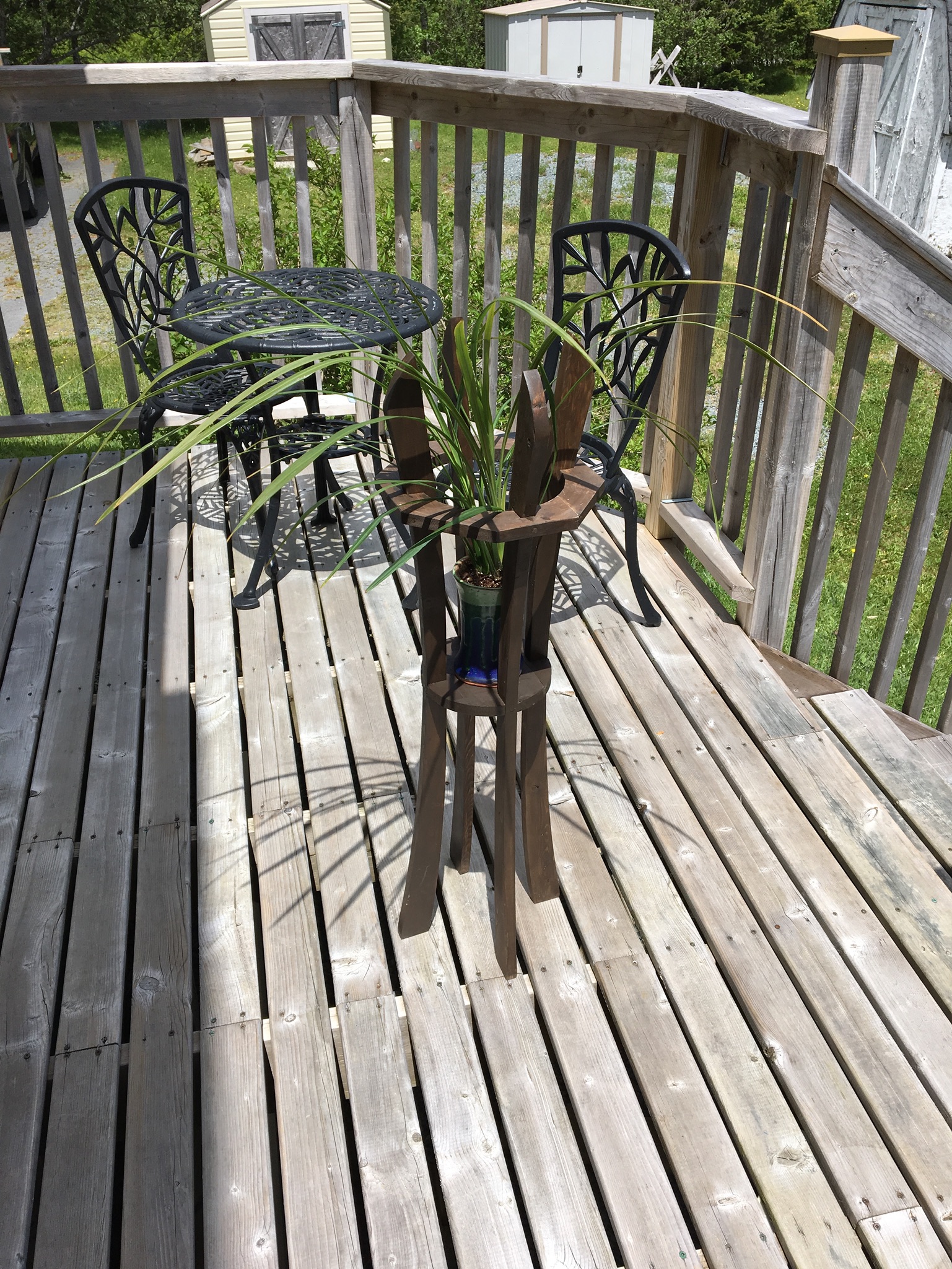
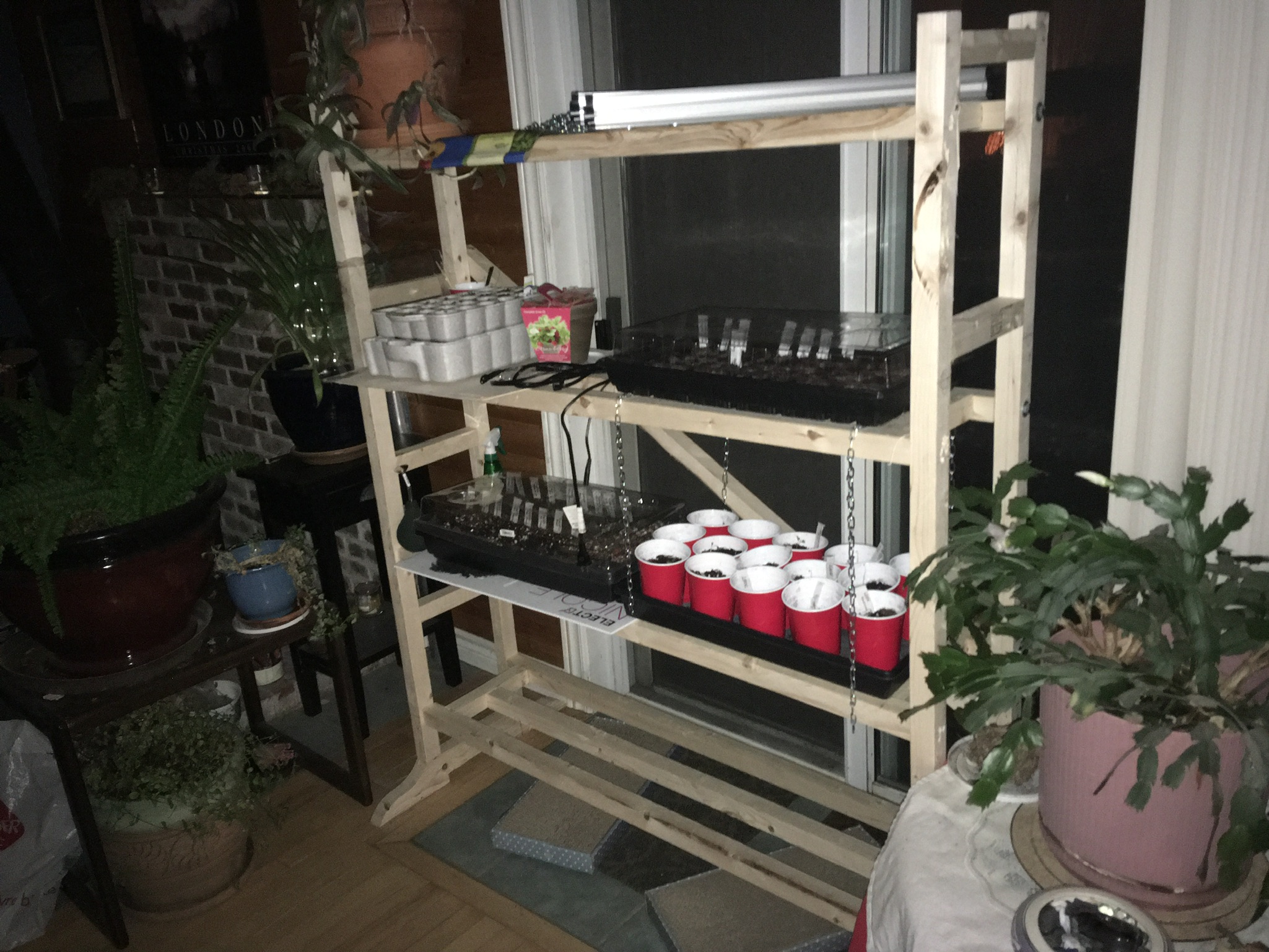
We expect to turn out a lot more furniture in future with a turn towards fine furniture woodcraft. However, we have also had many opportunities to develop more utilitarian furniture including these interesting works: an artist’s mobile/ lap case: nested stepping stools for Mary; a plant stand (made from a single 2×4 stud); and a seed incubator station for the Deanery.
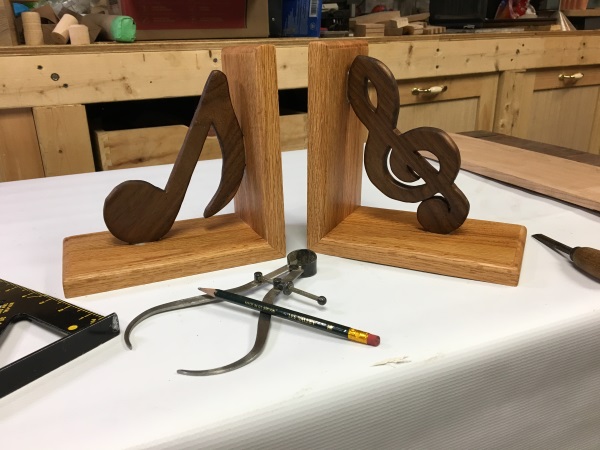
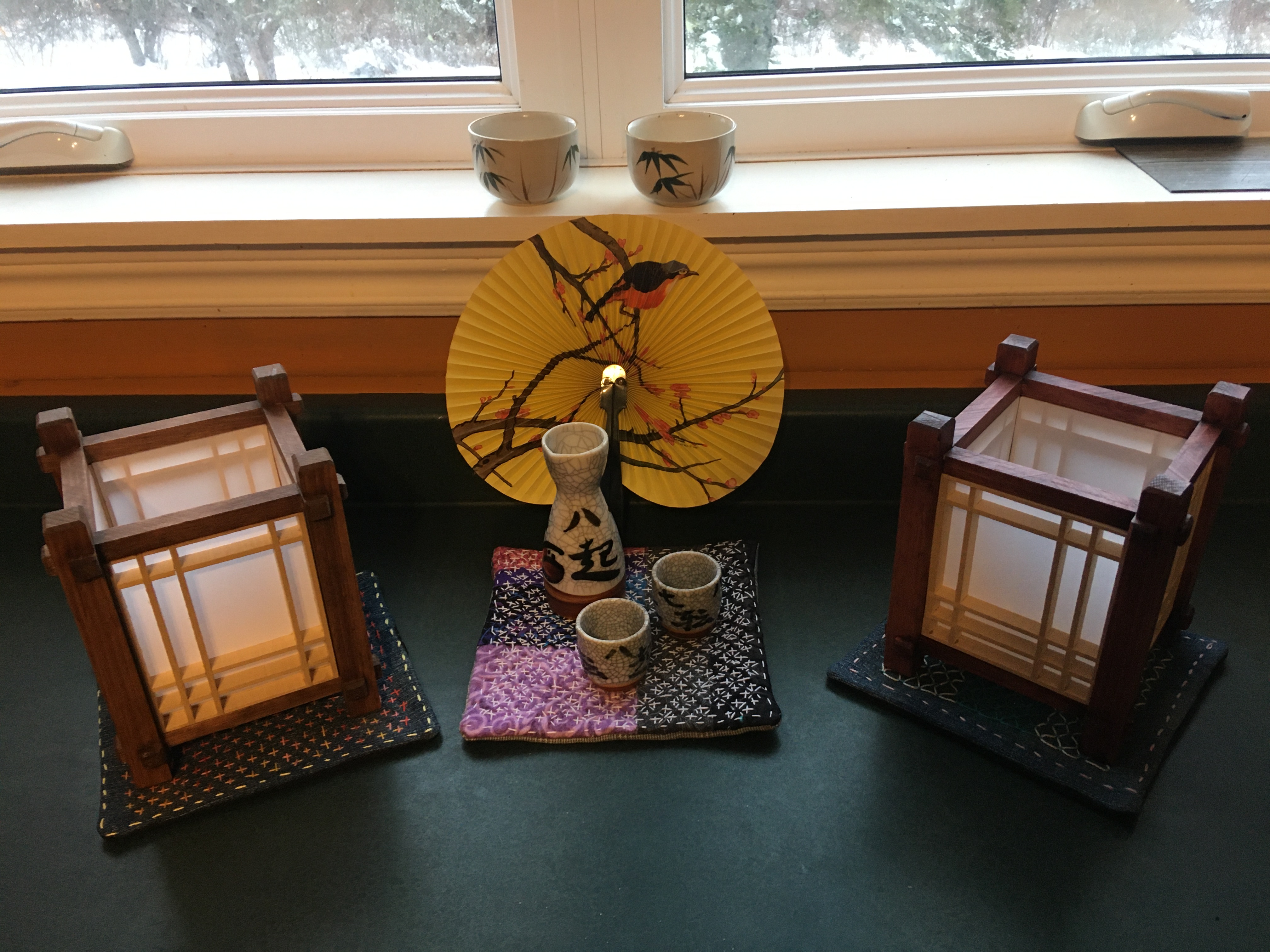
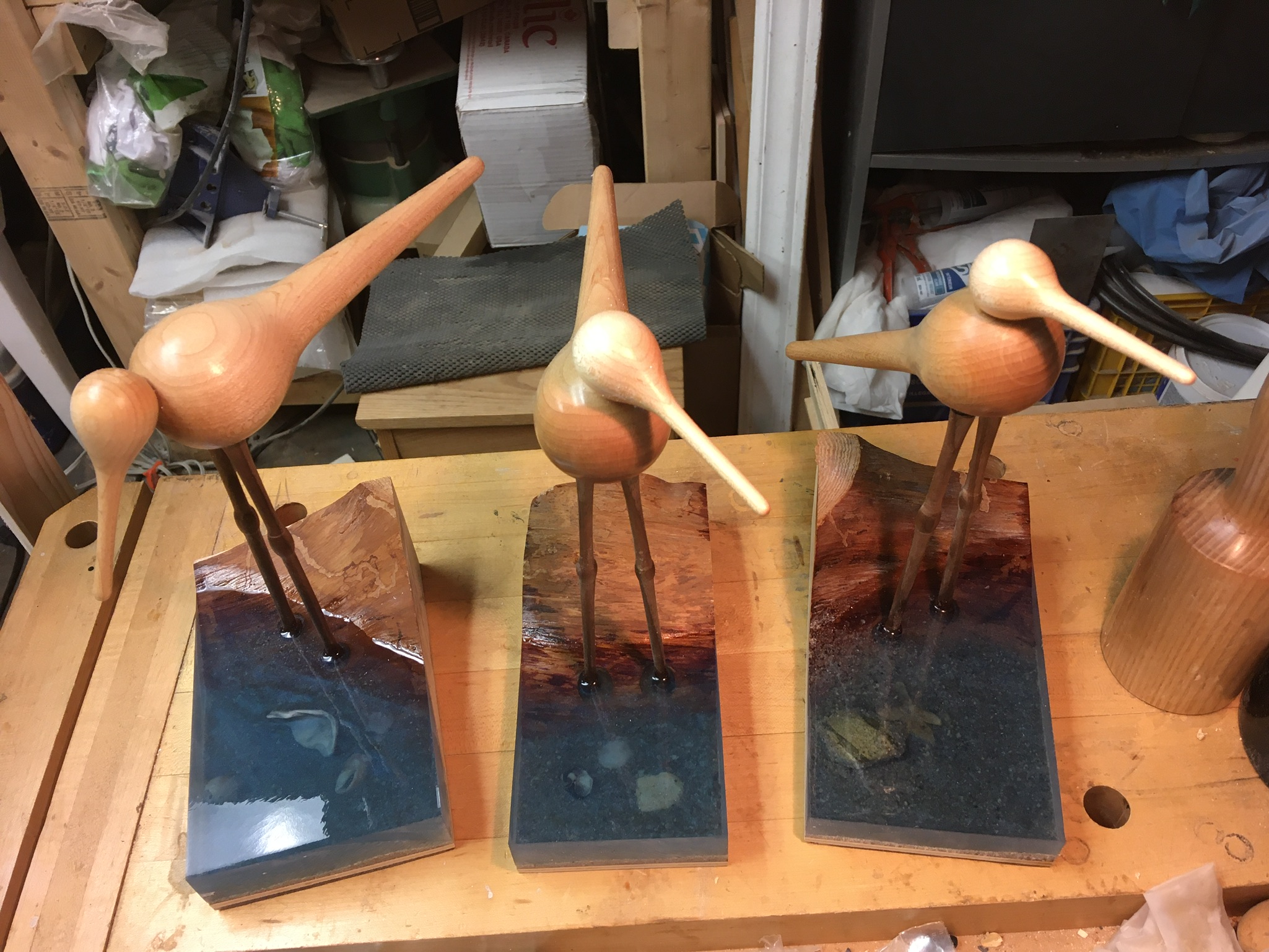
Sometimes, you just want to make something beautiful and that is the case with these recent projects: a set of music themed bookends for my grandchild, E.J.; Kumiko lanterns on Sashiko mats; shore birds in epoxy pool for Eastern Shores Gallery.


A Very Special Project: The Nova Scotia Heritage Wood Chess Set
The Nova Scotia Heritage Wood Chess Set embodies iconic Nova Scotia symbols and values as expressed by Nova Scotia’s rich tradition of artisan craftsmanship. Commissioned by Chess Nova Scotia (CNS) in 2019 as a commemorative chess set highlighting Nova Scotia heritage values, the set was first displayed at Pawn Wise: The Atlantic All-Ages Chess Festival 2022, a prestigious international event staged at the McNally Theatre Auditorium, Saint Mary’s University. The board and pieces were designed and constructed by master woodworker, Stephen Parsons, shown in the centre picture carving the iconic Sable Island horses used as the set’s knight pieces. At right is Chess Nova Scotia Secretary Roger Langen, receiving the second of the two boards created for this project.
The board incorporates a regulation-sized tournament playing area constructed of alternating maple and walnut to create contrasting tiles. The raised pattern is set into a skirt of Nova Scotia cherry, with a border of decorative banding (Bishop’s Line inlay) outlining the play area. The mitred corners of the cherry skirt are reinforced with black walnut splines.

On the top face of each side of the skirt is a graphic symbol of a contributing culture that has been instrumental in the development of Nova Scotia. Represented are Scottish, French, Mi’kmaq, and African heritage icons. On the outside faces of the skirt are inlays of polished Nova Scotia agate – a gemstone commonly found on the northern coasts of the Province.
Perhaps the most difficult and distinct design and construction challenge is that of the signature knight pieces, representing Nova Scotia’s Sable Island ponies. From an original rough prototype, the final knight design was modelled in digital 3d, roughed out on a CNC and then hand carved for detail. As a result, although based on a common design, each piece is slightly distinct from one another.
The set is currently on display at Saint Mary’s University/ Sobeys School of Business.